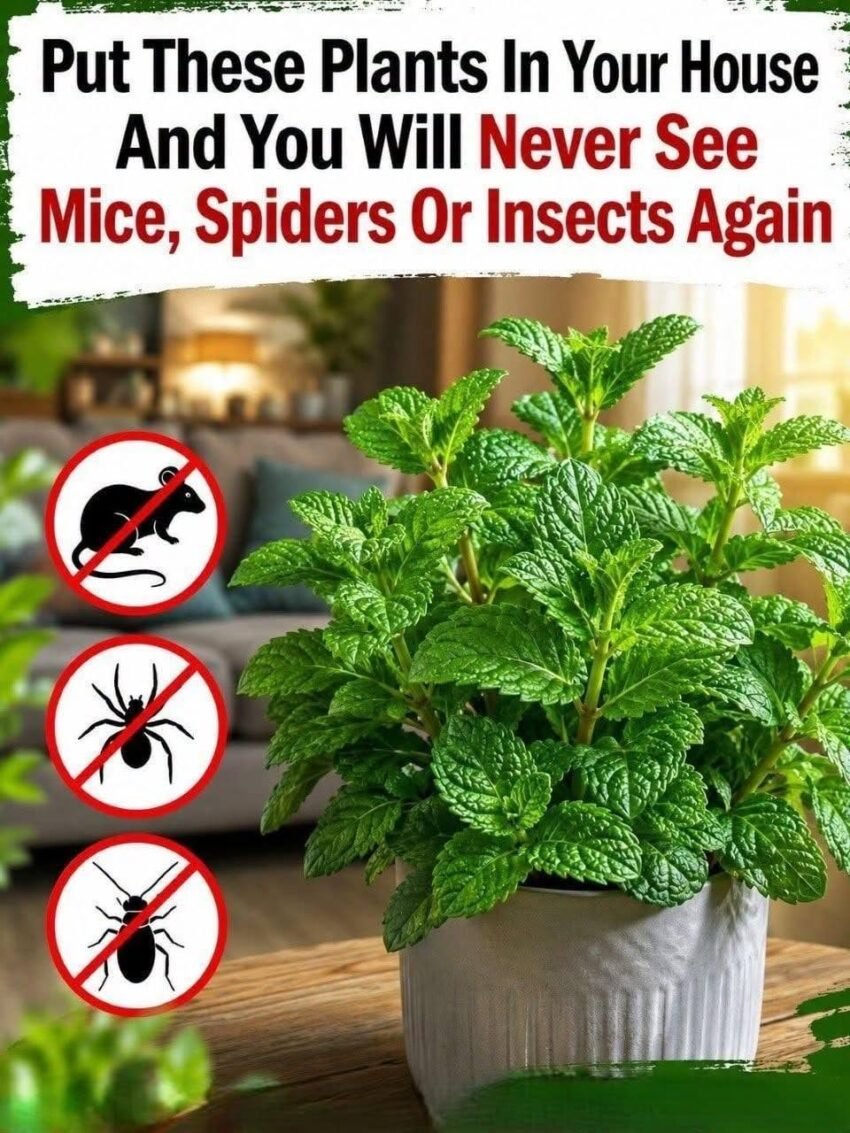
Put These Plants in Your House and You May See Fewer Mice, Spiders, and Insects
You may have heard that certain plants can “keep every pest out of your home.” That’s an exaggeration. No houseplant can reliably guarantee that you’ll never see mice, spiders, or insects again.
However, some strongly scented plants contain compounds that may repel certain insects, particularly when their leaves are crushed or their essential oils are used appropriately.
🌿 1. Mint
Mint has a strong scent that many people associate with insect deterrence.
Try it: Keep a pot near windows, doors, or other areas where insects commonly enter.
Important: Mint spreads aggressively, so growing it in a container is usually easier to manage.
🌿 2. Lavender
Lavender has a strong fragrance and is sometimes used to discourage mosquitoes and certain flying insects.
Place it near:
- Sunny windows
- Balconies
- Doorways
- Outdoor seating areas
Lavender generally needs plenty of sunlight to thrive.
🌿 3. Basil
Basil’s aromatic oils may help discourage some flying insects.
Keep a pot on a sunny windowsill and harvest the leaves regularly. Besides its potential pest-deterring effect, you also get a useful culinary herb.
🌿 4. Rosemary
Rosemary has a strong aromatic scent and can be grown indoors if it receives sufficient light.
It’s particularly useful as a kitchen herb, although simply having a rosemary plant indoors shouldn’t be considered reliable pest control.
🌿 5. Lemongrass
Lemongrass contains aromatic compounds related to those found in citronella products.
It can be a pleasant plant for a sunny area, but a potted lemongrass plant shouldn’t be confused with a proven mosquito-control system.
🌿 6. Marigolds
Marigolds are often recommended as natural insect deterrents because of their distinctive scent.
They’re especially useful outdoors around gardens and patios, where they can add color while potentially discouraging some pests.
🕷️ What About Spiders?
This is where online claims often go too far.
There isn’t strong evidence that placing a few mint or lavender plants around your home will eliminate spiders.
Spiders are generally attracted to places where they can find food, so reducing the insects a specific insect infestation, identifying the pest and eliminating its food, water, and entry points will usually they feed on can be more effective than relying on a particular plant.
Keep windows screened, remove webs regularly, and reduce indoor insect populations.
🐭 And What About Mice?
Plants are not a reliable way to get rid of mice.
You may see claims that peppermint, lavender, or other strong-smelling plants will drive mice away. Even if certain odors temporarily discourage rodents, they don’t solve the underlying problem.
For mice, the most effective strategy is usually exclusion and sanitation:
Seal entry points
Check around:
- Pipes
- Doors
- Windows
- Vents
- Roof gaps
- Cracks in walls and foundations
Remove food sources
Keep food in sealed containers and clean crumbs and spills promptly.
Reduce hiding places
Avoid leaving clutter, cardboard, or other nesting materials where rodents can hide.
🦟 Plants Aren’t a Complete Pest-Control System
If you’re dealing with a serious infestation, plants shouldn’t replace proper pest control.
A better approach is:
Plants + screens + sealed food + clean surfaces + sealed entry points + appropriate pest control
rather than relying on a single “miracle” plant.
A Simple Indoor Combination
If you want attractive, fragrant plants that may provide some limited insect-deterring benefits, consider:
Mint + lavender + basil + rosemary
Place them where they receive the light and growing conditions they need.
One important warning
Don’t apply concentrated essential oils directly to your skin, pets, or household surfaces without checking appropriate dilution and safety information. Some essential oils can be irritating or toxic to pets, particularly cats.
Bottom Line
🌿 Mint, lavender, basil, rosemary, lemongrass, and marigolds can be useful plants to have around the home, and some of their aromatic compounds may repel particular insects.
But no plant can guarantee a mouse-, spider-, or insect-free house.
If you’re actually dealing with mice or a specific insect infestation, identifying the pest and eliminating its food, water, and entry points will usually make a much bigger difference than adding plants.
