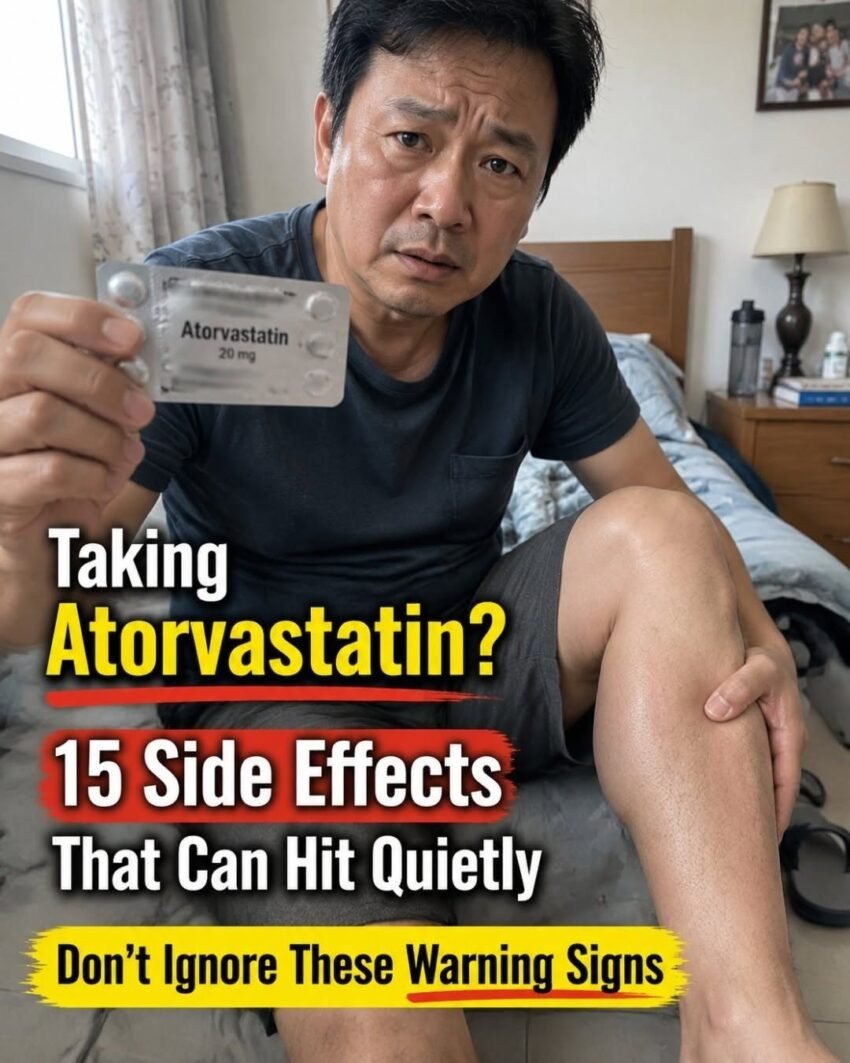
Taking Atorvastatin? 15 Subtle Side Effects You Should Know AboutAtorvastatin is a widely used statin that lowers LDL cholesterol and helps reduce the risk of heart attack and stroke. Most people tolerate it well, but side effects
Atorvastatin is a widely used statin that lowers LDL cholesterol and helps reduce the risk of heart attack and stroke. Most people tolerate it well, but side effects can occur—and some can be easy to overlook. nhs.uk+1
Don’t stop atorvastatin on your own. If you think it’s causing symptoms, speak with your doctor or pharmacist; another cause may be responsible, or your treatment may be adjusted safely. MedlinePlus
1. Muscle Aches
Aching or soreness in the muscles is one of the best-known potential statin effects.
It may feel like ordinary muscle soreness, which can make it difficult to recognize as a possible medication-related problem.
2. Muscle Weakness
Some people notice that they aren’t simply “sore”—they actually feel weaker than usual.
Unexplained weakness, especially if it is persistent or worsening, deserves medical attention.
3. Muscle Cramps
Cramps can occur for many reasons, including dehydration and physical activity, but they can also occur during statin treatment.
Don’t assume every cramp is caused by atorvastatin.
4. Joint Pain
Joint pain or arthralgia has been reported with atorvastatin. nhs.uk+1
If new joint discomfort began after starting treatment, mention the timing to your clinician.
5. Headache
Headaches are reported among possible statin side effects. nhs.uk
Persistent headaches, however, have many possible causes and shouldn’t automatically be blamed on atorvastatin.
6. Dizziness
Some people experience dizziness while taking atorvastatin. nhs.uk
If you’re repeatedly dizzy or feel as though you might faint, have your blood pressure and medications reviewed.
7. Digestive Problems
Atorvastatin can cause gastrointestinal symptoms such as:
- Diarrhea
- Nausea
- Indigestion
- Gas
- Constipation
These effects are generally mild, but persistent symptoms should be discussed with a healthcare professional. nhs.uk+1
8. Sleep Problems
Sleep disturbances have been reported with atorvastatin and other statins. nhs.uk+1
If insomnia began after starting or changing the medication, tell your clinician rather than simply discontinuing treatment.
9. Feeling More Tired
Unusual tiredness or reduced energy can sometimes occur.
But fatigue is nonspecific—it can also result from anemia, thyroid disease, poor sleep, diabetes, infections, and many other conditions.
10. Memory Problems or “Brain Fog”
Some people report forgetfulness or confusion while taking atorvastatin. MedlinePlus
These reports should be taken seriously without assuming that atorvastatin is definitely the cause. Your doctor can assess other possible explanations and determine whether a medication change is appropriate.
11. Changes in Blood Sugar
Statins can slightly increase blood glucose and may increase the risk of type 2 diabetes, particularly in people who already have risk factors for diabetes. MedlinePlus+1
For most people who need a statin, the cardiovascular benefits outweigh this potential risk.
12. Liver Enzyme Changes
Atorvastatin can cause elevations in liver enzymes.
Importantly, abnormal liver tests aren’t the same thing as serious liver damage. Actual severe liver injury is rare. MedlinePlus+1
Your clinician may order liver tests when clinically appropriate.
13. Loss of Appetite or Nausea
Reduced appetite and nausea can occur and may be especially noticeable when accompanied by other digestive symptoms.
If loss of appetite is persistent or accompanied by other concerning symptoms, get medical advice.
14. Unusual Bruising or Bleeding
Unusual bleeding or bruising is listed among symptoms that warrant medical attention, particularly when accompanied by other signs of possible liver problems. MedlinePlus
Don’t assume that unexplained bruising is simply an unavoidable part of getting older.
15. Rare but Serious Muscle Breakdown
This is the side effect people should know about without becoming unnecessarily frightened.
Rarely, statins can cause severe muscle injury (rhabdomyolysis), which can damage the kidneys. Warning signs include severe muscle pain, tenderness or weakness, fever, or dark/red-brown urine. nhs.uk+1
This requires prompt medical evaluation.
🚨 Signs You Shouldn’t Ignore
Contact a healthcare professional promptly if you develop:
9. Feeling More Tired
- Severe or unexplained muscle pain
- Significant muscle weakness
- Dark-colored urine
- Yellow skin or yellowing of the whites of the eyes
- Severe or persistent abdominal pain
- Unusual bleeding or bruising
- Significant unexplained fatigue
Severe muscle symptoms with dark urine can indicate muscle breakdown and require urgent assessment. nhs.uk+1
Medicines and Foods Can Matter Too
Some medicines can increase atorvastatin concentrations and consequently increase the risk of muscle toxicity. Examples include certain macrolide antibiotics, antifungal medicines, antiviral medicines, and some heart medications. nhs.uk+1
Grapefruit juice can also increase the chance of side effects, so discuss your usual grapefruit intake with your pharmacist or doctor. nhs.uk
Alcohol is another consideration, particularly heavy alcohol consumption, because it can increase the risk of liver problems. nhs.uk+1
The Most Important Point
A symptom occurring while you’re taking atorvastatin doesn’t automatically mean atorvastatin caused it.
If you develop troublesome symptoms, your clinician may consider your timing, dose, other medicines, medical conditions, and sometimes blood tests. In some cases, changing the dose or switching to another statin can resolve symptoms while preserving cholesterol-lowering treatment. MedlinePlus
Bottom line
Atorvastatin has substantial benefits for people who need cholesterol lowering, and most users don’t develop serious side effects. The symptoms worth remembering most are new muscle pain or weakness, unexplained fatigue, digestive problems, sleep or cognitive changes, and signs of liver or muscle injury.
Don’t discontinue the medication just because you recognize yourself in this list. Discuss the symptoms with your healthcare professional so the benefits and risks of your particular treatment can be assessed.
