If You Have These 9 Symptoms in Your Feet, It Could Be a Sign of Something Important
Your feet can sometimes reveal clues about your overall health. Changes in sensation, skin color, temperature, swelling, or wounds may be associated with conditions such as diabetes, nerve problems, circulation disorders, infections, or nutritional deficiencies.
However, these symptoms are not diagnostic on their own. The same foot symptom can have several different causes.
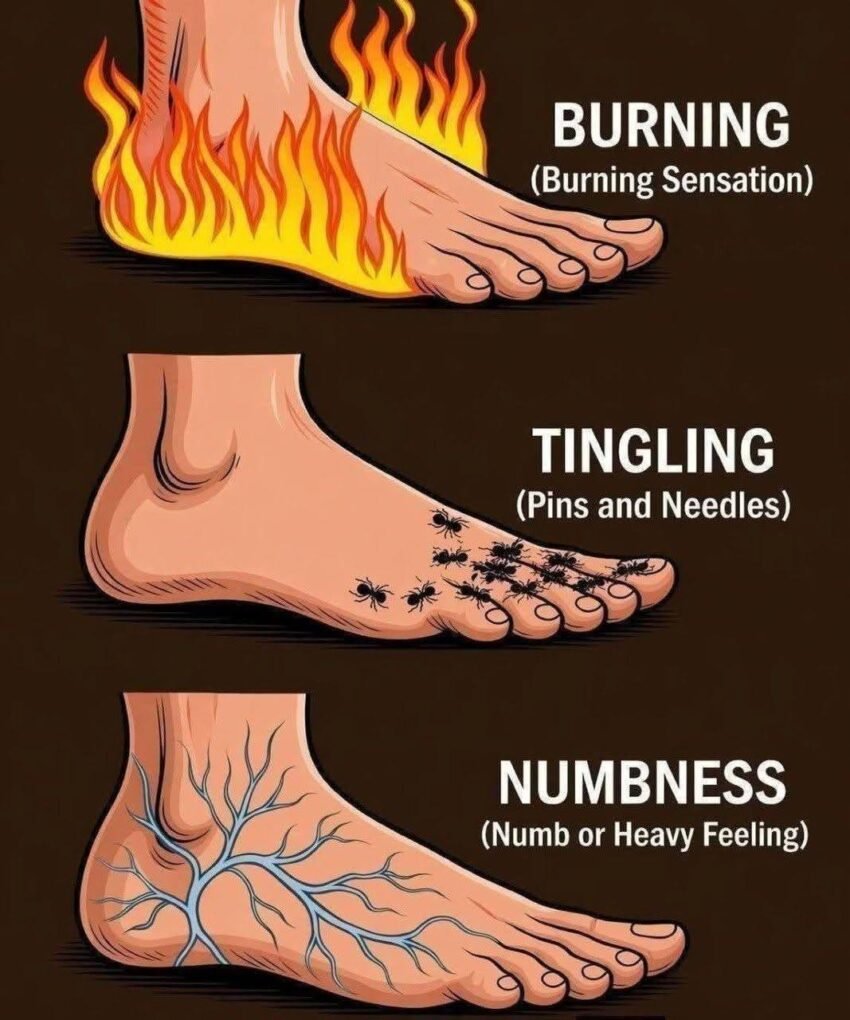
1. Persistent Tingling or “Pins and Needles”
A repeated tingling or prickling sensation in the feet can occur with peripheral neuropathy.
Diabetes is a common cause, but vitamin deficiencies, alcohol use, certain medications, nerve compression, and other neurological conditions can also cause it.
2. Numbness
If your feet feel unusually numb or you can’t properly sense temperature or touch, don’t ignore it.
Reduced sensation can increase the risk of unnoticed injuries, particularly in people with diabetes.
3. Burning or Shooting Pain
A burning sensation—especially worse at night—can be associated with nerve irritation or neuropathy.
It can also have other causes, so persistent burning pain deserves an appropriate medical assessment.
4. Cold Feet
Feet that are frequently cold may simply reflect your environment or individual circulation, but persistent coldness can sometimes occur with circulatory problems or nerve disorders.
If one foot suddenly becomes cold, pale, blue, extremely painful, or numb, that’s different and requires urgent medical attention.
5. Swollen Feet or Ankles
Swelling can result from prolonged standing, heat, certain medications, or injury.
But persistent or unexplained swelling can also be associated with heart, kidney, liver, or circulation problems.
Sudden swelling in one leg accompanied by pain, warmth, or redness should be assessed promptly.
6. Slow-Healing Sores
A cut or blister that doesn’t heal normally is particularly important in someone with diabetes.
High blood sugar, reduced circulation, and nerve damage can all contribute to foot wounds becoming difficult to heal.
Don’t wait for a foot ulcer to become severe before seeking medical care.
7. Changes in Skin Color
Watch for unusual:
- Pale or white skin
- Bluish coloration
- Redness
- Darkening
- Blackened tissue
A persistent change can have several causes, including circulation problems, infection, inflammation, or injury.
Black or rapidly deteriorating skin is an emergency sign.
8. Cracked, Dry, or Itchy Skin
Dry or cracked feet are extremely common and don’t automatically indicate a serious disease.
However, persistent itching, peeling, scaling, or cracking—especially between the toes—can be caused by athlete’s foot (fungal infection).
Treating the underlying problem can prevent cracks from becoming infected.
9. Changes in the Toenails
Thick, yellow, brittle, distorted, or separated toenails can occur with fungal infections, trauma, or other nail conditions.
A dark streak under a toenail that is new or changing should be evaluated by a healthcare professional because, although uncommon, certain skin cancers can occur beneath or around the nail.
🚨 When Foot Symptoms Need Urgent Attention
Seek urgent medical care if you develop:
- A foot that suddenly becomes cold, pale, blue, or severely painful
- A rapidly spreading infection
- Severe swelling with significant pain
- A wound that is turning black
- Fever with a red, hot, swollen foot
- Sudden loss of sensation or movement
People with diabetes should take new foot wounds, redness, swelling, or infections particularly seriously.
If You Have Diabetes
Foot care becomes especially important because diabetes can affect both nerve sensation and circulation.
Check your feet regularly for:
- Blisters
- Cuts
- Redness
- Swelling
- Cracks
- Changes in temperature or color
- Areas of pressure or rubbing
Don’t walk barefoot if you have reduced sensation, and have persistent abnormalities checked by your healthcare professional.
The Bottom Line
Your feet can provide useful clues, but there is no single list of nine foot symptoms that proves you have a particular disease.
Tingling, numbness, burning pain, swelling, color changes, slow-healing wounds, and nail changes are worth paying attention to—especially when they are new, persistent, worsening, or occurring together.
If you tell me which of the nine symptoms you’re experiencing and whether it’s one foot or both, I can explain the most likely possibilities and what would warrant a medical check.
