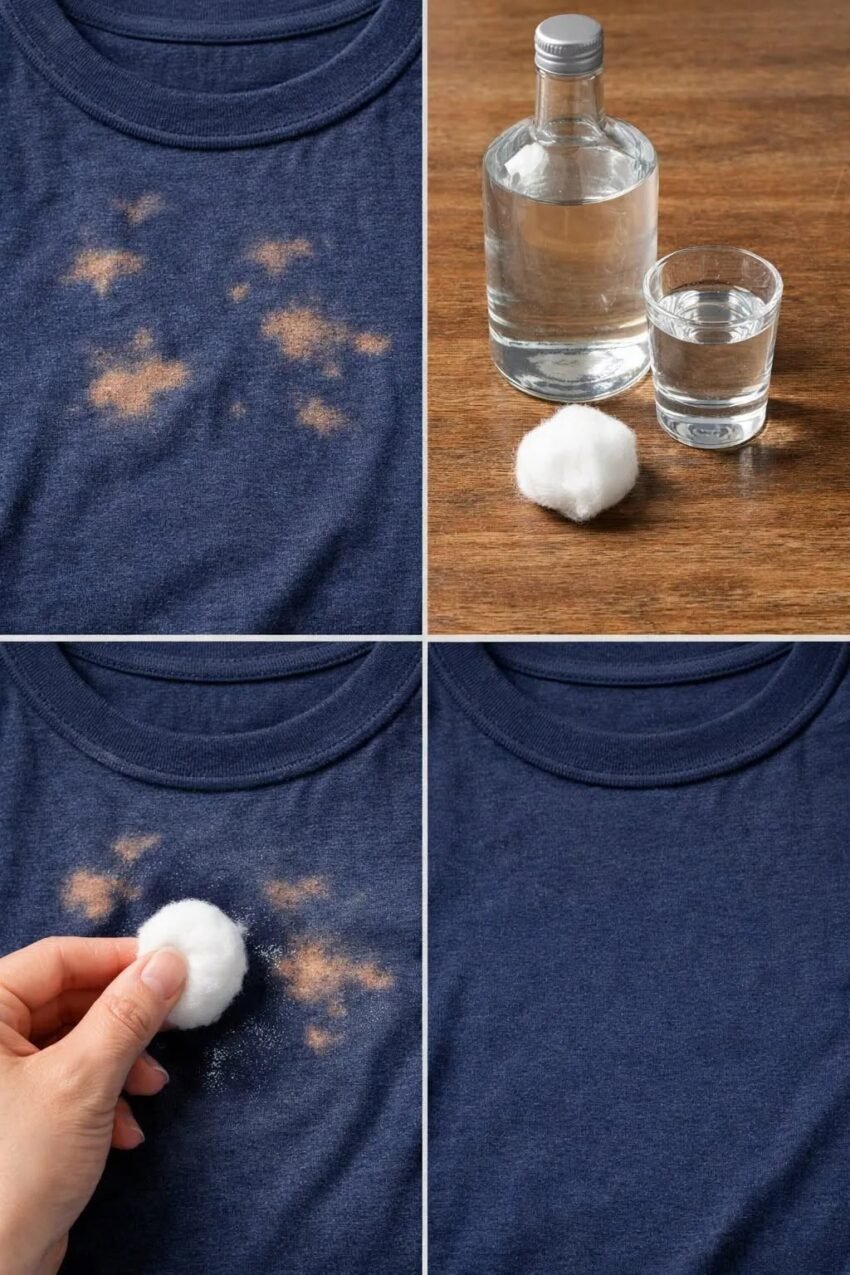
Bleach Stains on Your Clothes? Don’t Throw Them Away Yet — Here’s What You Can Do
Bleach stains are frustrating because, technically, bleach usually doesn’t “stain” fabric—it removes or changes the fabric’s dye. That’s why ordinary stain removers generally can’t simply wash the mark away.
The good news is that you can often make the damage much less noticeable or turn it into a deliberate design.
1. Act Quickly if the Bleach Was Just Spilled
If bleach has only recently gotten onto the clothing, immediately rinse the affected area thoroughly with cool running water.
The goal is to remove as much bleach as possible and stop further chemical damage.
Then wash the garment according to its care label.
⚠️ Never mix bleach with other cleaners
Don’t try to neutralize bleach by pouring vinegar, ammonia, toilet cleaner, or another household chemical onto the fabric.
Mixing bleach with certain chemicals can release dangerous gases.
2. For a Small Bleach Mark: Use Fabric Dye or a Fabric Marker
Once the bleach has removed the original color, you can try restoring the appearance.
For a small spot, a fabric marker or fabric paint in a matching color can work surprisingly well.
How to do it
- Wash and completely dry the garment.
- Find a fabric marker close to the original color.
- Test the marker on an inconspicuous area first.
- Apply a very small amount to the bleached area.
- Allow it to dry and add additional layers if necessary.
This works best for small, localized marks.
3. Re-Dye the Entire Garment
If the bleach damage covers a larger area, trying to color only the affected patch may make the repair more obvious.
In that situation, dyeing the entire garment a darker color can produce a more uniform result.
For example, a faded black shirt may be easier to transform into a darker shade rather than trying to perfectly recreate the original black in several small spots.
Keep in mind
Bleach can weaken fabric fibers, so heavily damaged areas may remain lighter even after dyeing or may become more fragile.
Always check whether the fabric is suitable for the dye you’re using.
4. Turn the Bleach Marks Into a Design
Sometimes the easiest solution is to stop trying to hide the bleach.
A garment with several accidental bleach spots can be transformed into a deliberate bleach-dyed or tie-dye-style design.
You can create:
- Speckled patterns
- Swirls
- Clouds
- Ombre effects
- Geometric designs
This works particularly well on dark cotton clothing.
Important: Don’t deliberately use bleach without appropriate ventilation, protective gloves, and careful handling. Never mix it with other cleaning products.
5. Cover the Area With an Embroidered Patch
For a larger damaged area, a sewn or iron-on patch can be an easy solution.
You can choose something decorative rather than trying to make the repair invisible.
This is particularly useful for:
- Jeans
- Jackets
- Sweatshirts
- Children’s clothing
- Workwear
6. Add Embroidery
If you re-dyeing the garment, adding a patch, embroidering over it, or turning the marks into enjoy simple crafts, embroidery can turn a bleach mark into part of the design.
For example, a small irregular spot can become:
🌸 a flower
⭐ a star
🍃 a leaf
❤️ a heart
🐝 a small insect
This can look intentional rather than repaired.
7. Don’t Expect Vinegar or Baking Soda to Restore the Color
A common internet recommendation is to use vinegar, baking soda, or another household ingredient to “remove” a bleach stain.
Unfortunately, once bleach has chemically removed the dye, washing it with another household ingredient generally won’t restore the original color.
The practical solution is usually to:
recolor → cover → redesign → or replace the affected section.
What If the Fabric Is Already Damaged?
Bleach doesn’t only affect color. Strong bleach exposure can weaken some fibers.
If the area feels:
- Thin
- Brittle
- Rough
- Easily torn
- Significantly weakened
then coloring the area won’t restore its strength.
A patch, embroidery, or alteration may be a better solution.
The Best Solution Depends on the Damage
| Type of damage | Best approach |
|---|---|
| Tiny spot | Fabric marker/paint |
| Several small spots | Re-dye or intentional pattern |
| Large faded area | Dye the entire garment |
| Hole or weakened fabric | Patch or embroidery |
| Dark cotton garment | Consider a deliberate bleach-dye design |
| Valuable/delicate garment | Professional textile cleaner or tailor |
Final Tip
Before attempting any repair, check the garment’s fabric composition and care label. Cotton, polyester, wool, silk, and blended fabrics respond very differently to dyes and chemical treatments.
Bottom line
A bleach mark usually can’t be “washed out” because the bleach has removed the original dye. But that doesn’t necessarily mean the clothing is ruined.
For a small mark, try recoloring it. For larger damage, consider re-dyeing the garment, adding a patch, embroidering over it, or turning the marks into an intentional design.
And if the bleach spill happened moments ago, rinse the garment thoroughly first—and never mix bleach with vinegar, ammonia, or other household cleaners.
