What This Image Appears to Show
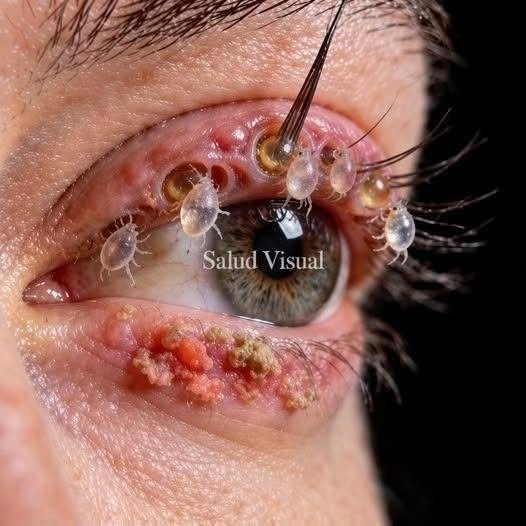
The image is not a typical example of what happens simply from sleeping with makeup on. It appears to be a highly magnified/medical-style image showing severe inflammation around the eyelids and eyelashes, with structures that resemble eyelash/follicle debris and possibly Demodex mites. Some online images of this type are also edited or dramatized, so the picture alone cannot establish a diagnosis.
If you mean “sleeping with eye makeup on”
Sleeping with mascara, eyeliner, or other eye cosmetics can cause several problems:
1. Blocked oil glands
The eyelids contain tiny meibomian glands that release oil to prevent tears from evaporating too quickly. Makeup left overnight can contribute to blockage.
Possible effects:
- Dry or gritty eyes
- Burning and irritation
- Redness
- Blurred vision
- Recurrent styes/chalazia
2. Blepharitis
Accumulated makeup, oil, bacteria, and skin debris around the eyelashes can contribute to blepharitis, an inflammation of the eyelid margins.
Symptoms can include:
- Crusts or flakes around eyelashes
- Itching
- Swollen eyelids
- Red eyes
- Burning
- Feeling as though something is in the eye
3. Bacterial contamination
Old or improperly stored eye makeup can accumulate microorganisms. Rubbing contaminated makeup into the eye can potentially contribute to conjunctivitis or other infections.
4. Eyelash problems
Repeatedly sleeping in mascara can make lashes brittle and cause them to break or fall out. Mascara can also become hard and cause irritation when particles enter the eye.
5. Demodex overgrowth
Demodex mites naturally live on human skin and around some hair follicles. Their presence by itself does not mean someone is dirty. In some people, excessive mite populations can be associated with blepharitis and eyelid irritation.
However, sleeping with makeup does not mean that your eyelashes will suddenly become filled with mites like the picture suggests.
If you mean “sleeping with contact lenses”
If the missing phrase was “sleeping with contact lenses,” that’s a different and more important issue. Sleeping in lenses that aren’t specifically approved for overnight wear can substantially increase the risk of corneal infection (microbial keratitis) and corneal injury.
Seek urgent eye care if you have significant eye pain, marked redness, light sensitivity, discharge, or reduced/blurry vision after sleeping in contact lenses.
Bottom line
The image should not be interpreted as a literal consequence of one night of sleeping with makeup or contact lenses. It appears to depict severe eyelid/eyelash pathology and may be presented in an exaggerated way online.
